

In tennis court construction, acrylic is a very common surface material for sports facilities. When people see a hard court with bright colors and a smooth surface, they may assume that it is simply a layer of ordinary colored paint.
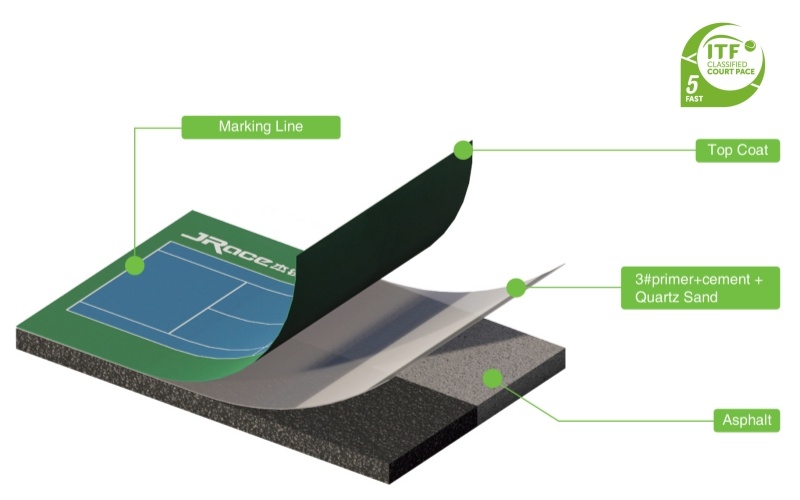
In fact, acrylic tennis court surfacing is usually part of a complete sports surface system. It works together with the base, fillers, surface coatings, and, in some systems, cushioning layers to form the final playing surface.
What Is Acrylic Sports Surfacing?
Acrylic/Polyurethane is a resin-bound coating system that features a textured and colored surface.
Therefore, an acrylic sports surface is not simply “a layer of paint.” It is a tennis court system in which acrylic-based coatings are used as the primary surface material.
Why Is Acrylic Commonly Used for Tennis Courts?
Suitable for Hard Tennis Court Surface Systems
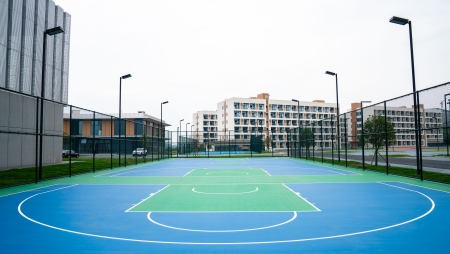
Acrylic is commonly applied over asphalt or concrete bases to create a smooth and continuous hard court playing surface.
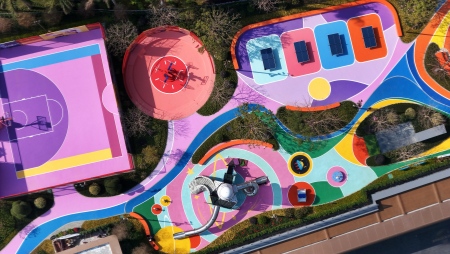
Flexible Color and Texture Design
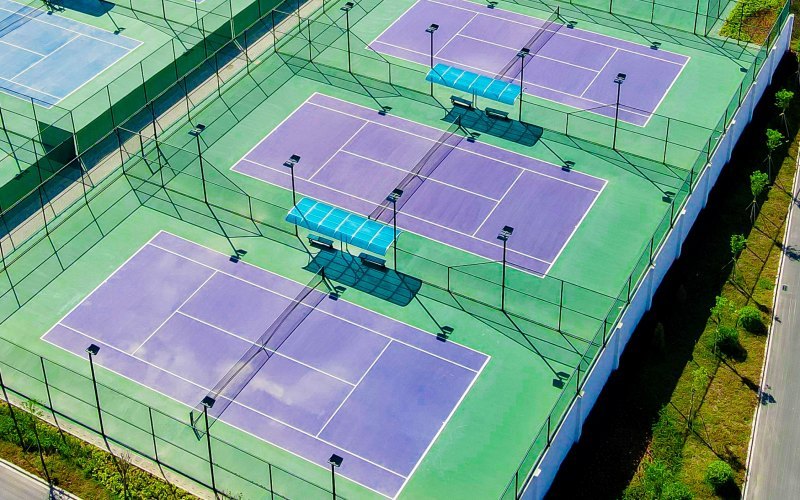
Acrylic/polyurethane surface systems can feature specific texture and coloring characteristics.
Tennis courts usually need to distinguish the playing area, boundary lines, and different functional zones. Therefore, surface color and texture design are important considerations.
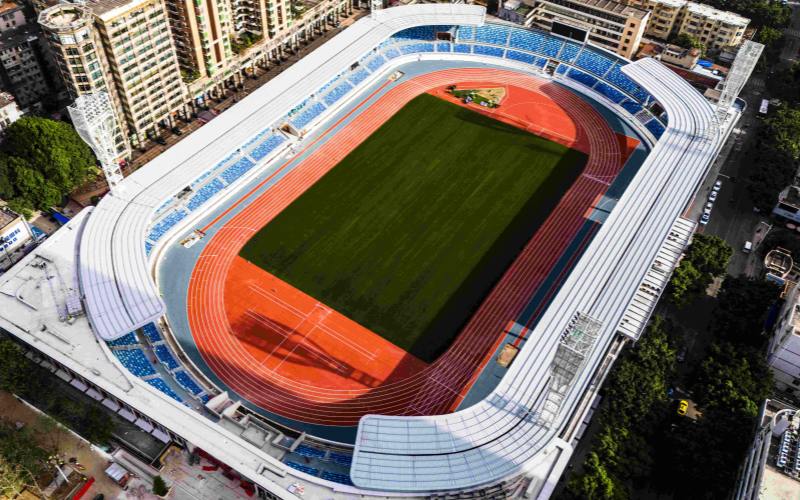
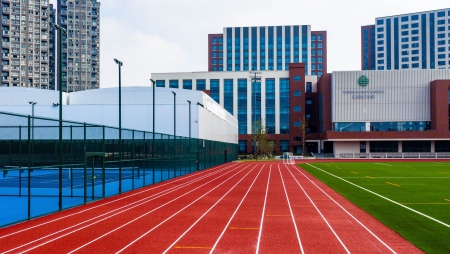
Color combinations such as blue, green, and red are commonly achieved through the color design of the surface system.
However, color does not determine performance. Courts with the same color may still have different playing characteristics due to differences in the base, coating structure, aggregates, and installation methods.
Court Pace Can Be Evaluated Through Testing
Tennis court speed is not determined simply by whether a surface is “hard” or “soft.” It is related to the performance of the complete court system.
The ITF uses the Court Pace Rating (CPR) to classify tennis court surfaces according to their playing speed. There are currently five categories:
| Category | Court Pace |
|---|---|
| Category 1 | Slow |
| Category 2 | Medium-slow |
| Category 3 | Medium |
| Category 4 | Medium-fast |
| Category 5 | Fast |
Therefore, it is not possible to determine a court's speed simply by seeing the word “acrylic.” Different acrylic products and complete surface systems may have different court pace characteristics. The final classification should be based on testing results.
JRace's REPUS hard court acrylic series has passed ITF international tennis federation certification for all five court pace categories.
Cushioning Systems Can Be Configured According to Project Requirements
Not all acrylic tennis courts use exactly the same structure.
Some projects incorporate a cushioning system between the base and the surface coating to provide a different court structure and playing feel.
However, the actual performance of a cushioning layer depends on factors such as the material, thickness, condition of the base, and installation quality.
A Long History of Use in Tennis Courts
Acrylic is not a new material that has only emerged in recent years. It is a type of tennis court surface that has been developed, used, and tested over a long period of time.
What Should You Consider When Choosing an Acrylic Tennis Court?
Check the Base Before the Surface
An acrylic surface cannot replace a stable base.
The strength, flatness, drainage conditions, and crack control of the base can all affect the final performance of the court.
Therefore, when constructing or renovating a tennis court, it is not recommended to compare surface materials based only on their unit price. The first step should be to confirm whether the base meets the requirements for installation.
Pay Attention to Testing and Certification for Professional Projects
The ITF's product classification is primarily based on Court Pace Rating and does not mean comprehensive approval or endorsement of a product by the ITF.
Therefore, if a project is intended for professional competitions or high-level training, the relevant testing and certification requirements should be reviewed in greater detail.
Frequently Asked Questions
Is an acrylic tennis court just ordinary paint?
No.
An acrylic tennis court is generally a complete sports surface system consisting of the base, underlying materials, fillers, surface coatings, and other components. It is not simply a layer of ordinary paint.
Can acrylic tennis courts be made in different colors?
Yes.
Acrylic surface systems offer flexible coloring and texture design options, allowing different colors to be selected according to the functional requirements and visual design of the court.
Does an acrylic tennis court always have no cushioning layer?
Not necessarily.
Some systems include a cushioning layer between the base and the surface. Whether a cushioning system is required depends on the intended use, structural design, and performance requirements of the court.
Is acrylic suitable for professional tennis courts?
Yes.
Acrylic is one of the common surface types used for tennis courts internationally. Acrylic tennis court systems that have undergone court performance testing and meet relevant ITF requirements are also available.
Conclusion
The advantage of an acrylic tennis court does not lie in the idea that “simply applying acrylic will create a standard tennis court.” Rather, acrylic can be combined with asphalt, concrete, cushioning systems, and different surface structures to create sports flooring systems suitable for different project requirements.
When selecting an acrylic tennis court system, it is recommended to consider the court area, intended use, base conditions, frequency of use, target court pace, cushioning requirements, installation quality, and long-term maintenance rather than focusing only on the color or material name.
JRace provides acrylic and SPU sports flooring systems for different sports facilities.
If you are planning a tennis court project, you can provide the court area, intended use, and project location, and we can recommend a suitable sports flooring system based on your specific requirements.