

Choosing between a Full PU running track and a Full PU Mixed-Type Running Track mainly depends on the project’s performance requirements, budget, intended use, and other site-specific conditions.
Simply put, Full PU running tracks are suitable for projects that prioritize athletic performance and higher specifications, while Full PU Mixed-Type running tracks can be considered as an option for balancing performance and project costs.
What Is a Full PU Running Track?
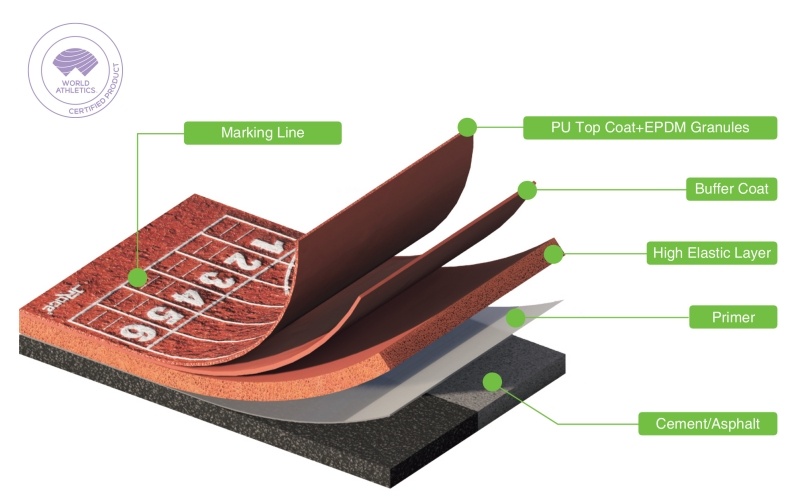
A Full PU running track is a synthetic running track system made primarily from polyurethane (PU) materials and installed on site.
If a project has high requirements for running track performance, durability, and certification, a Full PU system is generally worth considering.
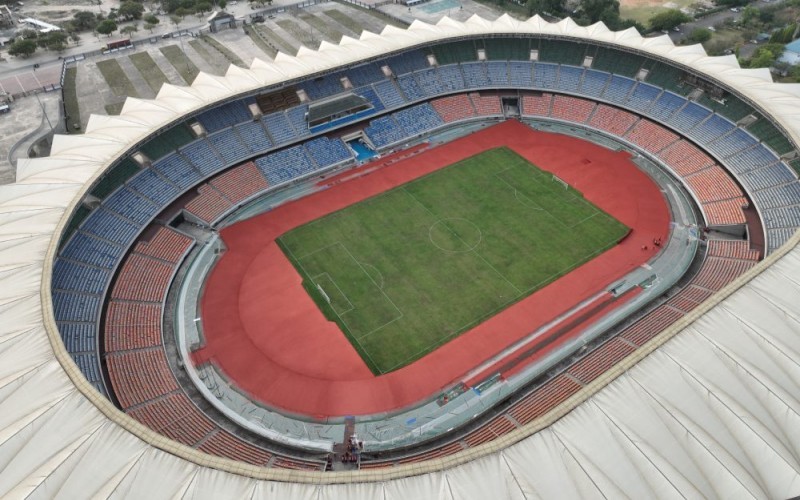
For example, the Full PU track JRace built at Tanzania’s National Stadium in 2024 was designed for high-level international competitions and holds World Athletics (WA) Class 1 certification. Its cushioning layer is made entirely from JRace’s UNITE-TECH Full PU material, with no elastic rubber granules added, as part of JRace’s solvent-free Full PU running track system.
What Is a Mixed-Type Running Track?
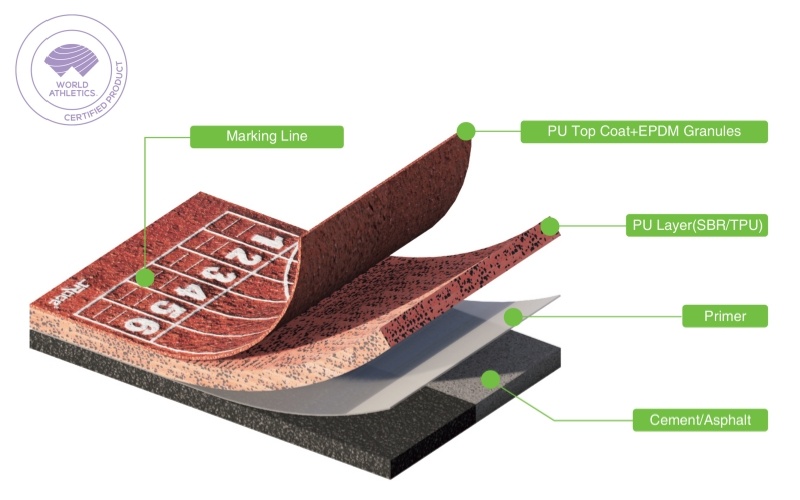
A Mixed-Type running track is a synthetic track system constructed on site using multiple material layers combined to form an integrated surface structure.
A typical Mixed-Type system may consist of an elastic rubber granule layer combined with a polyurethane surface layer, although the exact structure may vary depending on the product design.
What Is the Difference Between Full PU and Mixed-Type Running Tracks?
| Comparison Item | Full PU Running Track | Full PU Mixed-Type Running Track |
|---|---|---|
| System Structure | Primarily based on a polyurethane system | Composite structure consisting of an elastic rubber layer + polyurethane surface layer, etc. |
| Installation Method | On-site installation | On-site installation |
| Surface | Seamless synthetic surface | Seamless synthetic surface |
| Source of Elasticity | Mainly provided by the PU system | Mainly provided by the elastic rubber base layer and PU system |
| PU Material Usage | Usually higher | Usually reduces the amount of PU required |
| Project Cost | Usually higher | Usually offers a cost advantage |
| Typical Applications | High-performance and high-specification projects | Schools, universities, and general sports facilities |
Because Mixed-Type systems use materials such as rubber granules as part of the track structure, they can reduce the amount of relatively expensive polyurethane required compared with systems that use cast polyurethane throughout the relevant structure. This can provide a cost advantage.
Which Running Track Is Right for Your Project?
If High Performance Is the Priority, Consider a Full PU Running Track
Full PU running tracks may be more suitable for:
• Projects with high athletic performance requirements
• Sports stadiums with high usage frequency
• Projects with higher requirements for running track system specifications
If You Need to Balance Performance and Project Budget, Consider a PU Mixed-Type Running Track
PU Mixed-Type running tracks can be considered for:
• School athletics tracks
• University sports facilities
• Community sports facilities
• Projects that need to balance performance requirements and budget
However, the final choice should always be based on a technical evaluation of the specific project requirements rather than simply assuming that one system is always “better” than the other.
What Should You Compare When Purchasing a Running Track?
Do not compare running tracks based solely on their price per square meter.
When evaluating suppliers, it is recommended to request the following information:
1. Complete running track structure
2. Material composition
3. Test reports
4. Certification information
5. Substrate and installation requirements
6. Project references and warranty conditions
Is Full PU Always Better Than Mixed-Type?
Not necessarily.
Full PU and Mixed-Type are two different system structures rather than simply representing “high-end” and “low-end” options.
A Full PU system can reduce the influence of other material layers on the overall system structure and may be suitable for projects that specifically require a Full PUR system.
A Mixed-Type system, on the other hand, combines multiple material layers to meet running track performance requirements while optimizing material usage.
The final performance of either system still depends on the specific system design, material quality, thickness, substrate condition, and installation quality.
Conclusion
If a project places greater emphasis on high performance, a Full PU running track may be worth prioritizing.
If a project aims to meet its athletic performance requirements while balancing the overall project budget, a Mixed-Type running track is a solution worth evaluating.
Regardless of which system you choose, it is not recommended to compare running tracks based only on product names or prices. Professional procurement should consider the complete system structure, thickness, technical performance, test reports, certification status, and installation requirements before making the final decision based on the specific needs of the project.
JRace specializes in the research, development, and manufacturing of synthetic running tracks, sports courts, and professional sports flooring materials. We provide a range of sports surface solutions, including permeable running tracks, Full PU running tracks, Mixed-Type, sandwich running tracks, semi-prefabricated running tracks, and prefabricated rubber running tracks. We also provide professional technical support and installation guidance to help customers build safe, durable, and high-performance sports facilities.