

EPDM granules are not limited to rubber running tracks. They can be used for rubber running tracks, children’s sports and activity areas, jogging tracks and recreational sports areas, and other multi-purpose recreational surfaces. The right system depends on the intended use, the complete flooring structure, and the performance and safety requirements of the facility, not on the granules alone.
EPDM granules are commonly used in rubber running tracks, sports surfaces, and children’s activity areas. EPDM is a type of synthetic rubber that can be combined with polyurethane and other materials to create resilient and wear-resistant sports surfaces. Thanks to its wide range of color options and good weather resistance, EPDM is also widely used in projects where both performance and visual design are important.
Synthetic Running Tracks
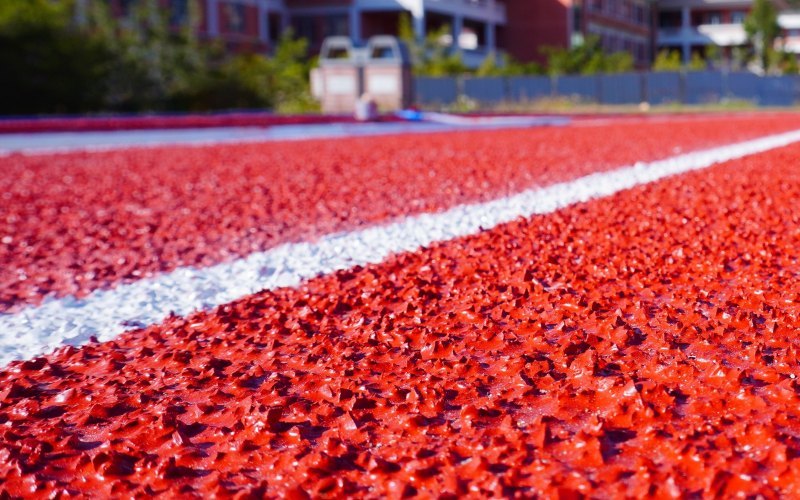
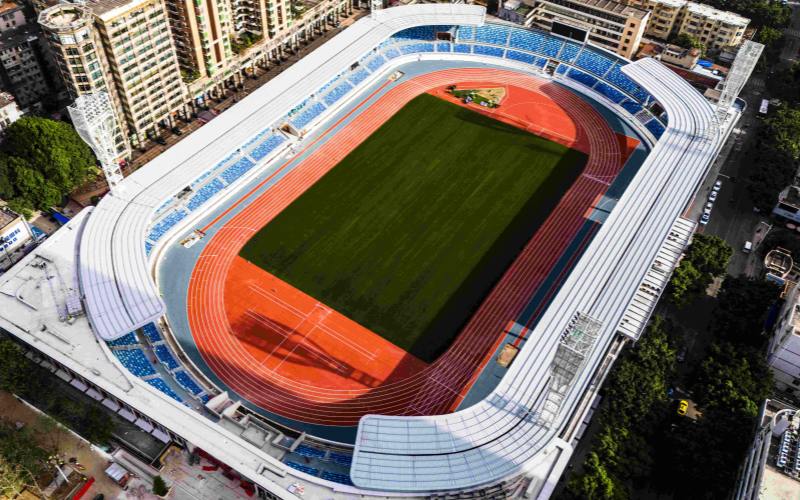
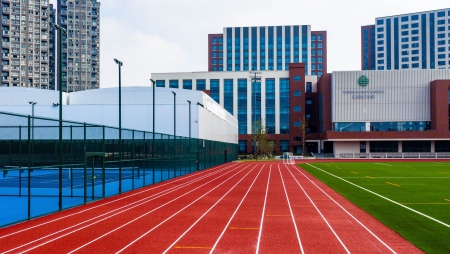
Synthetic running tracks are one of the most typical applications for EPDM granules.
In some in-situ rubber track systems, EPDM granules can be used as the surface layer and combined with polyurethane materials to form the finished running track surface. EPDM provides a wide range of color options, allowing schools, sports centers, training facilities, and other projects to select colors according to their overall design.
It is important to note that a running track is not simply a surface made by adding EPDM granules. A running track is a complete sports flooring system, and the materials, structure, installation method, and final performance need to be determined according to the specific project requirements.
Children’s Sports and Activity Areas
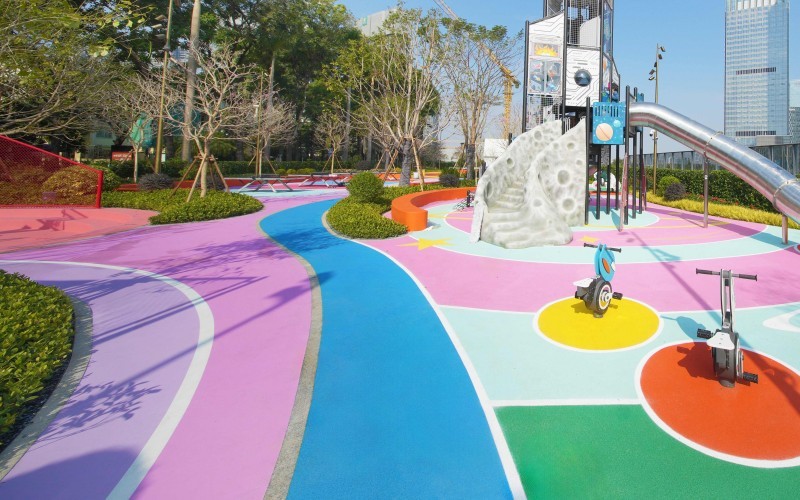
Strictly speaking, children’s activity areas are not traditional competitive sports facilities. However, EPDM granules are widely used in these applications.
These surfaces are commonly installed in children’s playgrounds and activity areas where impact attenuation and fall protection are important considerations.
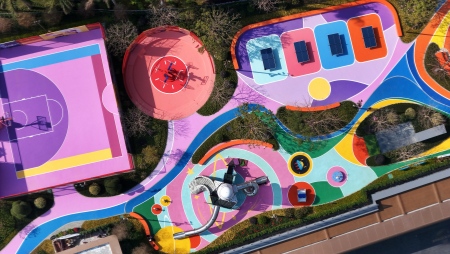
In 2025, JRace participated in the development of a large outdoor integrated sports facility in southern China, which included a colorful parent-child children’s area. The project selected a highly resilient and impact-absorbing flooring system with an 8.5+1.5 cm EPDM safety surface.
The system used high-rubber-content EPDM granules without recycled rubber granules. It was designed to provide fall protection and impact attenuation and achieved the 1.52-meter critical fall height requirement under ASTM F1292-2022 at 23°C.
Because EPDM is available in a wide range of colors, children’s activity areas can also incorporate different colors and patterns, combining functional performance with visual appeal.
Jogging Tracks and Recreational Sports Areas
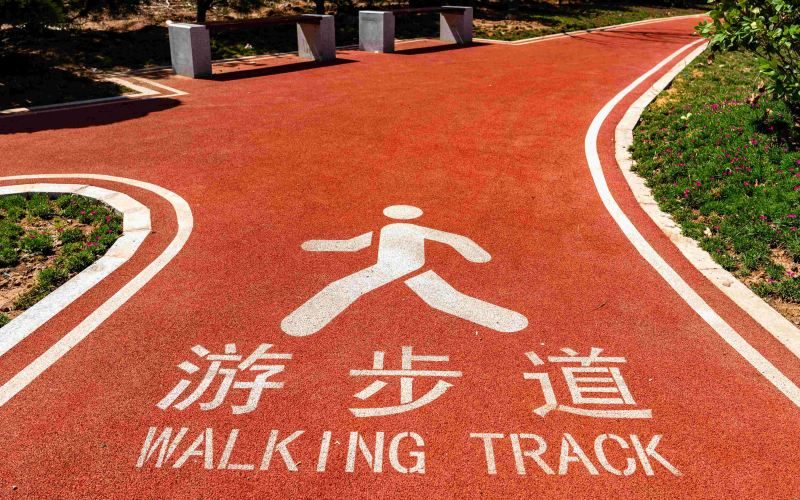
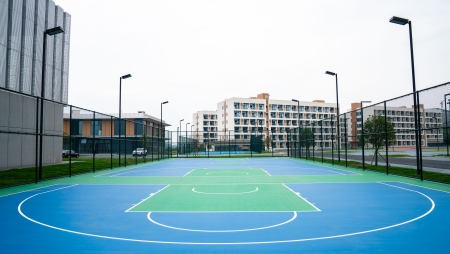
In addition to standard sports facilities, EPDM granules can also be used for jogging tracks, community sports spaces, and other recreational exercise areas.
These facilities generally place less emphasis on the specialized performance requirements of a single competitive sport and more emphasis on walking and running comfort, wear resistance, resilience, and overall appearance.
EPDM granules can be combined with polyurethane and other materials to create resilient surfaces, making them suitable for public spaces used for walking, jogging, and light recreational activities.
Why Are EPDM Granules So Widely Used?
The wide range of applications for EPDM granules is closely related to their material characteristics.
First, EPDM is a synthetic rubber material that can be used in flooring systems where resilience and impact attenuation are required.
Second, EPDM offers a wide range of color options. Traditional black rubber granules are commonly made from SBR, while EPDM can be manufactured in various colors, providing greater flexibility for projects that require colorful surface designs.
In addition, EPDM can be combined with polyurethane and other materials to create different flooring systems according to the requirements of each facility.
However, this does not mean that EPDM granules are suitable for every sports facility. Different sports have different requirements for surface friction, ball rebound, shock absorption, resilience, and wear resistance. Material selection should therefore be based on the specific application and project requirements.
What Should You Consider When Choosing an EPDM Sports Flooring System?
When selecting an EPDM sports flooring system, several factors should be considered.
First, consider the application.
Is the surface intended for a running track, jogging track, or children’s activity area? Different applications require different flooring structures.
Second, consider the complete flooring system.
EPDM granules are generally not used on their own. They are combined with binders, base layers, and other surface materials to form a complete flooring system.
Third, consider the quality of the granules.
Particle size, color consistency, uniformity, and material properties can all affect the final performance and appearance of the flooring.
Frequently Asked Questions
Can EPDM granules only be used for rubber running tracks?
No. In addition to being used in certain rubber running track systems, EPDM granules can also be used for jogging tracks, multi-purpose recreational areas, children’s activity surfaces, and other applications.
What is the difference between EPDM and SBR?
Both are rubber granules, but they are different types of materials. SBR is commonly produced from recycled tire rubber, while EPDM is a synthetic rubber that offers a wider range of color options. SAPCA also identifies both materials as commonly used granules for wet-pour safety surfacing.
Are EPDM granules suitable for outdoor use?
EPDM can be used for many outdoor sports and recreational surfaces. However, whether it is suitable for a particular project depends on the product specifications, local climate, intended use, and the design of the complete flooring system.
Can EPDM granule colors be customized?
EPDM is generally available in a wide range of colors, making it suitable for sports facilities that require color coordination, zoning, or decorative surface designs. The specific color range depends on the supplier and product.
JRace supplies multi-color EPDM granules in different thicknesses and rubber-content options to accommodate different site and application requirements.
Conclusion
EPDM granules are not limited to rubber running tracks. They can be found in a wide range of applications, including running tracks, jogging tracks, children’s activity areas, and other recreational sports surfaces.
However, different sports facilities require different flooring structures and performance characteristics. When selecting EPDM granules, it is therefore important to consider more than just color and price. Factors such as the type of sport, frequency of use, site conditions, and the complete flooring system should also be taken into account.
JRace specializes in running tracks, sports flooring systems such as SPU and acrylic surfaces, and EPDM sports flooring materials. We provide suitable sports flooring material solutions for different sports facility projects.
If you are planning a new sports facility, you can select the appropriate flooring system based on the facility type, surface area, intended use, and project requirements.