

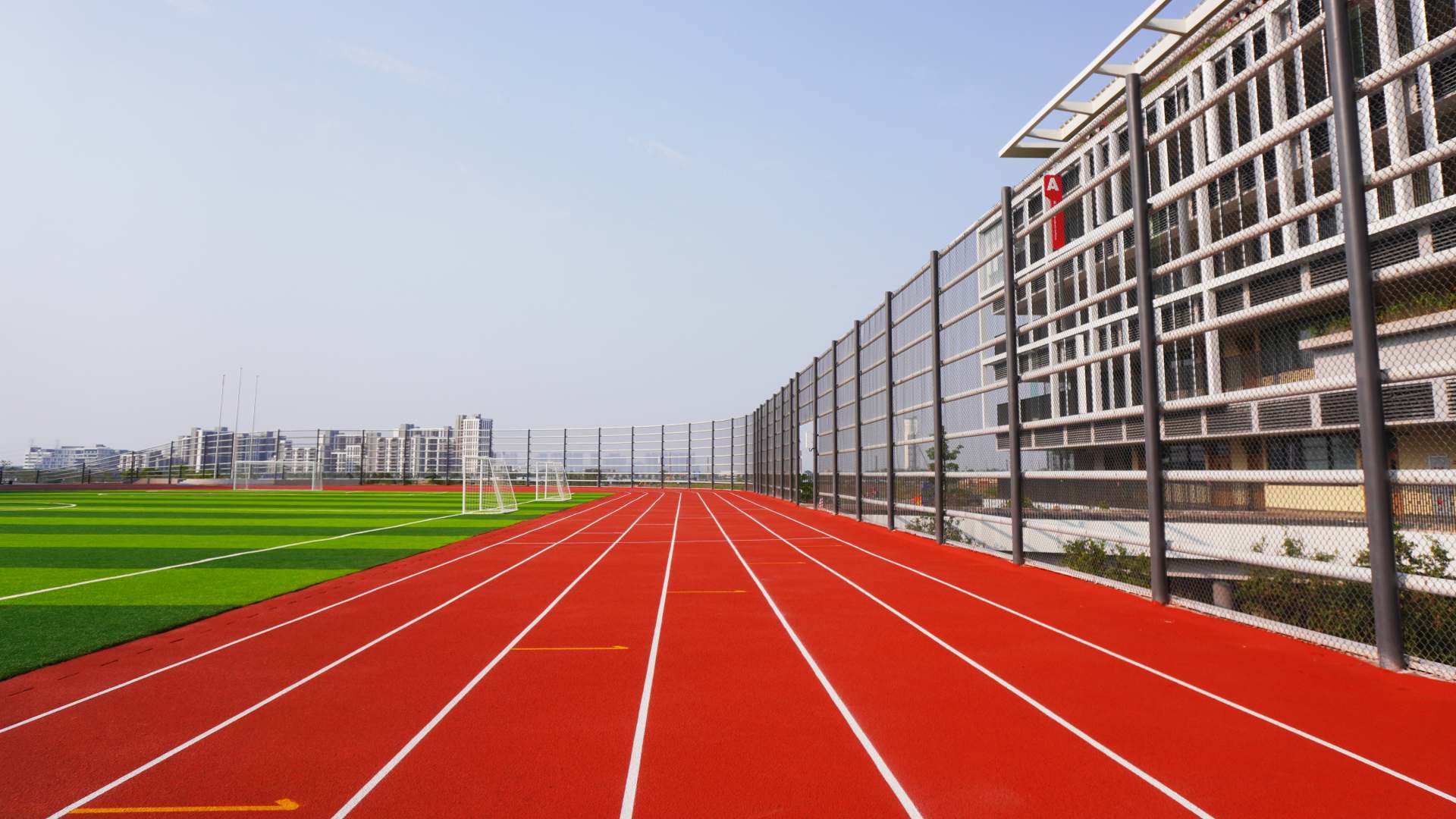
Installing a synthetic running track is more than simply laying a sports surface. A good result depends on proper planning, a suitable base, the right track system, careful installation, and good maintenance.
For schools, universities, sports centers, and professional athletic facilities, understanding the basic installation process can help project owners make better decisions and avoid common problems.
So, how is a running track installed?
In general, the process can be divided into 8 key steps, from site preparation to final line marking and maintenance.
1. Start with Site Assessment and Planning
Before installation begins, the site should be carefully checked.
The condition of the existing ground or base is especially important. The surface should be stable, reasonably flat, and suitable for the track system being installed.
Drainage is another important consideration. Water should be able to leave the track area properly after rain. Poor drainage can lead to water accumulation and may affect the track over time.
The project team should also consider:
• The condition of the existing base
• Local weather and climate
• Drainage requirements
• Expected level of use
• The type of sports facility
• Local construction requirements
• Whether the track will be used for competition
Good planning at this stage can help reduce problems during construction.
2. Choose the Right Running Track System
Not every running track uses the same surface system.
The right choice depends on the project, budget, climate, expected use, and performance requirements.
Common running track systems include:
Breathable Running Track
Breathable or porous tracks are commonly used for schools, training facilities, and community sports areas. They can offer good drainage and are often considered a practical option for projects with a controlled budget.
Full-PU Running Track
Full-PU systems use polyurethane as the main surface material. They can provide a seamless surface and good elasticity, making them suitable for a wide range of sports facilities.
Sandwich Running Track
A sandwich system combines different layers to provide a balance between performance, durability, and cost. It is widely used in schools, training facilities, and athletic fields.
Prefabricated Running Track
Prefabricated tracks are manufactured in a factory and installed on site. They can provide consistent product quality and are often used for high-level sports facilities and competition tracks.
The best system should be selected according to the actual requirements of the project rather than simply choosing the most expensive option.
3. Prepare the Base
The base is one of the most important parts of a running track.
A high-quality track surface cannot perform properly if the base underneath it is unstable or poorly prepared.
Depending on the project, the base may include a prepared sub-base together with an asphalt or concrete surface.
Before the track material is installed, the construction team should check whether the base is:
• Stable and properly compacted
• Smooth and reasonably flat
• Clean and free from loose materials
• Suitable for bonding with the track system
• Properly connected to the drainage system
Any major cracks, uneven areas, dirt, oil, or other problems should be dealt with before surface installation begins.
For new projects, the base should be planned together with drainage and the overall site design.
4. Prepare the Track Materials
Once the base is ready, the materials can be prepared for installation.
The preparation method depends on the type of running track.
For cast-in-place systems, materials such as polyurethane binders and rubber granules may need to be mixed on site according to the manufacturer's instructions.
For prefabricated systems, the rolls are prepared and positioned before being bonded to the base.
At this stage, it is important to make sure that the materials are stored properly and that the installation area is clean and ready.
Weather conditions should also be considered. Rain, excessive moisture, or unsuitable temperatures may affect the installation process.
5. Install the Running Track Surface
The installation method depends on the selected track system.
For cast-in-place running tracks, the material is applied directly to the prepared base. Different layers may be installed to create the required elasticity, strength, texture, and surface finish.
For prefabricated running tracks, the rolls are placed on the prepared surface and bonded using a suitable adhesive.
The installation team needs to pay close attention to:
• Surface alignment
• Material joints
• Adhesive application
• Surface consistency
• Curved sections
• Track edges
• Overall appearance
Curves and joints require particular care because small installation problems can become more noticeable after the track is completed.
6. Allow the Track to Cure
After the surface has been installed, it needs enough time to cure before it is opened for use.
The required curing time can vary depending on the track system, materials, temperature, humidity, and other site conditions.
During this period, the track should be protected from unnecessary foot traffic, vehicles, water, and other activities that could damage the new surface.
The manufacturer's installation instructions should always be followed because different systems may have different curing requirements.
7. Check the Finished Surface and Mark the Track
Before the track is opened, the finished surface should be inspected.
The construction team should check the overall appearance, surface condition, joints, edges, and other important areas.
If the track is being built for official competition, additional inspections and testing may be required according to the relevant standards.
Once the surface has fully cured, lane lines and other markings can be applied.
Accurate line marking is important because it affects how the track is used and how athletes move around the track.
For competition facilities, the markings should follow the applicable World Athletics or local federation requirements.
8. Maintain the Running Track After Installation
Running track installation does not end when the construction team leaves the site.
Regular maintenance can help keep the surface clean, safe, and in good condition for longer.
Basic maintenance may include:
• Removing leaves, dirt, and other debris
• Cleaning spills and stains
• Checking the surface regularly
• Keeping drainage areas clear
• Looking for cracks, loose materials, or damaged areas
• Repairing small problems before they become larger
The maintenance method should also match the specific track system. Always follow the product manufacturer's recommendations when cleaning or repairing the surface.
What Are the Most Common Running Track Installation Problems?
Some track problems are related not to the surface material itself, but to installation and site conditions.
Poor Base Preparation
An uneven or unstable base can affect the finished surface and may lead to problems later.
Solution: Check and prepare the base carefully before installing the track.
Poor Drainage
Water that remains on or around the track can create long-term problems.
Solution: Consider drainage during the early planning and base construction stages.
Incorrect Installation Conditions
Rain, excessive moisture, or unsuitable weather conditions can affect some track materials during installation.
Solution: Plan installation around suitable weather and follow the manufacturer's requirements.
Poor Joint or Edge Treatment
For systems with multiple rolls or layers, poorly finished joints and edges can affect the appearance and performance of the track.
Solution: Use suitable installation methods and pay extra attention to seams, curves, and edges.
Opening the Track Too Early
A newly installed track needs time to cure. Using it too soon can damage the surface.
Solution: Allow the track to fully cure before opening it for normal use.
How Long Does Running Track Installation Take?
There is no single installation time for every running track project.
The construction period depends on factors such as:
• Track size
• Surface system
• Base condition
• Weather
• Site preparation
• Material availability
• Project complexity
For this reason, it is better to create an installation schedule based on the actual project rather than relying on a fixed number of days.
A professional supplier or installation team can usually provide a more accurate schedule after reviewing the site and selected track system.
Can You Install a Running Track on an Existing Surface?
In some projects, a new running track can be installed over an existing asphalt or concrete base.
However, the existing surface must first be checked carefully.
A professional assessment should consider its stability, flatness, cracks, drainage, cleanliness, and compatibility with the new track system.
If the existing base has serious problems, simply covering it with a new track surface may not solve the underlying issue.
This is why base assessment is one of the most important parts of running track installation.
Should You Choose the Track Material or Installation Team First?
Ideally, these two decisions should be considered together.
Different running track systems have different installation requirements. A supplier with experience in both materials and installation can help the project team understand:
• Which track system is suitable
• What type of base is required
• How the material should be installed
• What site conditions need to be considered
• How the track should be maintained after installation
This can make communication easier and reduce the risk of problems caused by poor coordination between material suppliers and construction teams.
Running Track Installation Checklist
Before starting a running track project, it is useful to check the following:
• Site and existing base have been assessed
• Drainage has been considered
• The appropriate track system has been selected
• Construction requirements have been confirmed
• Materials are suitable for the project
• Weather conditions are suitable for installation
• Installation instructions are available
• Joints, edges, and curves will be carefully treated
• The surface will be allowed to cure properly
• Final line marking will follow the applicable requirements
• A regular maintenance plan is in place
Final Thoughts
A successful running track project depends on more than choosing a good surface material.
Proper site preparation, a suitable track system, careful installation, sufficient curing time, and regular maintenance all play an important role.
For project owners, understanding the basic running track installation process can make it easier to communicate with suppliers and installation teams and make better decisions for the project.
If you are planning a new running track, it is recommended to discuss the project requirements with an experienced running track manufacturer before construction begins. The right solution should consider the site, climate, intended use, budget, and required performance.
JRACE provides running track materials and technical support for different types of sports projects, helping project teams select suitable running track systems based on their specific requirements.