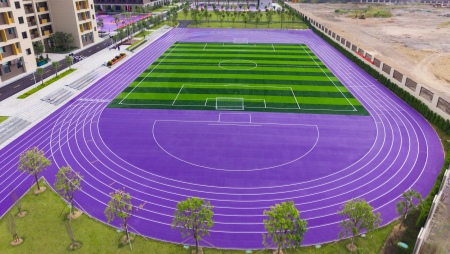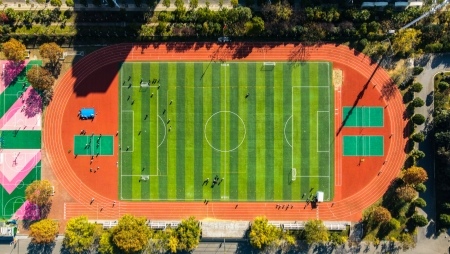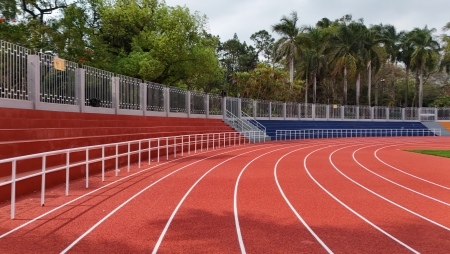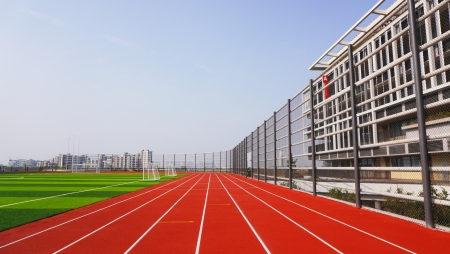


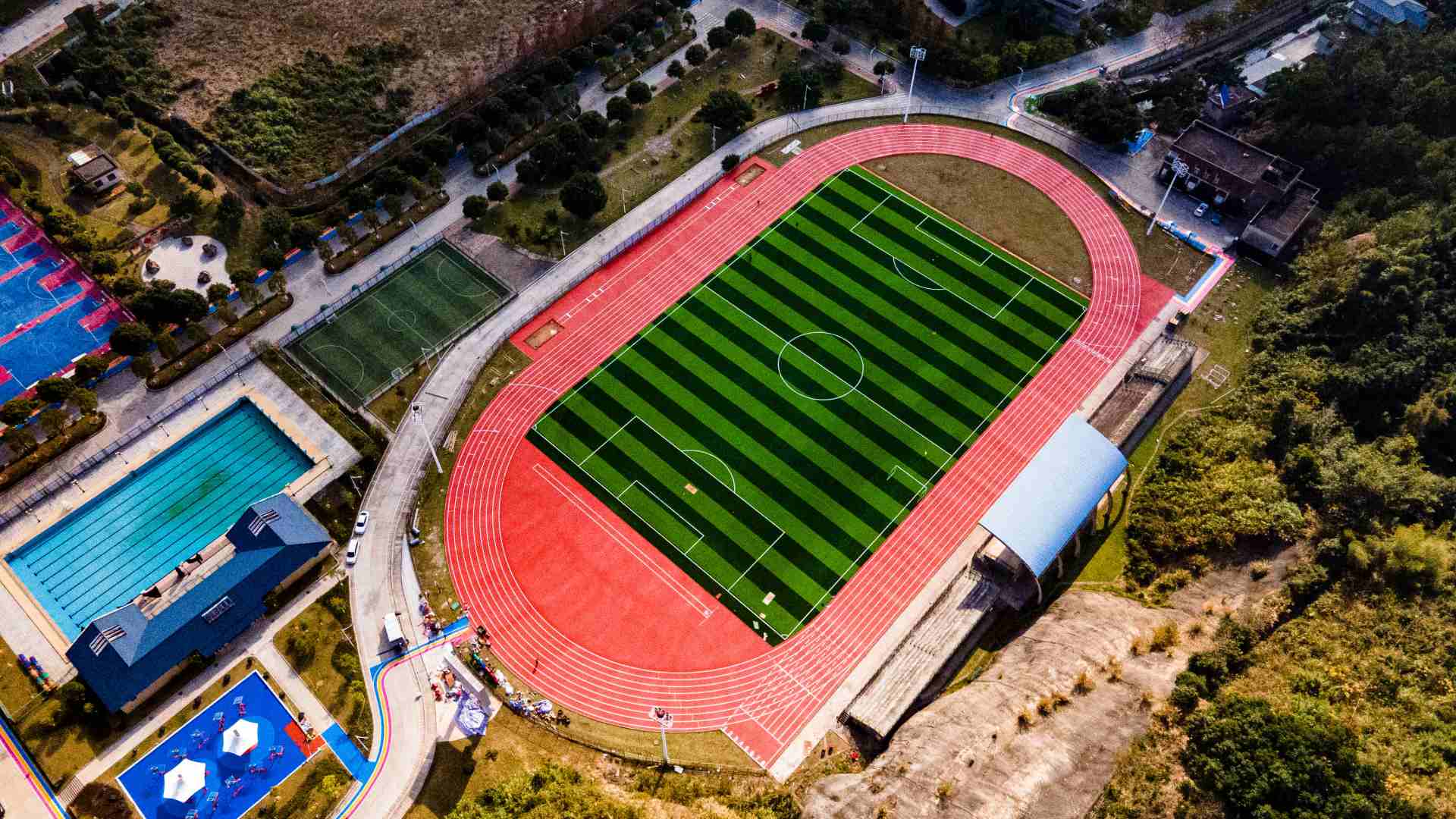
A synthetic running track represents a substantial long-term investment for any school, sports club, or municipal athletic stadium. While modern polyurethane systems are engineered to withstand rigorous training and harsh weather, no track is entirely immune to premature aging or physical abuse. Without disciplined care and correct usage rules, a surface can suffer from premature hardening, friction loss, curb delamination, and costly structural failure.
To help facility directors and groundkeepers safeguard their investment, this comprehensive running track maintenance guide integrates daily cleaning routines, seasonal weather protection, professional inspection protocols, and strict facility usage rules into one actionable standard operating procedure.
1. Why Proactive Running Track Maintenance Matters
Neglecting routine upkeep leads to cumulative micro-damage that ruins performance and threatens athlete safety:
• Hardening & Loss of Shock Absorption: Accumulated grime, solar exposure, and lack of cooling increase impact forces on athletes' joints, raising injury risks.
• Faded Lane Markings & Surface Wear: Atmospheric dust acts like sandpaper beneath athletes' shoes, grinding down topcoats and obscuring competition lines.
• Premature Delamination & Bubbling: Blocked drains and unsealed border edges allow water to penetrate beneath the elastic base layer.
• Accelerated Degradation: Chemical contact, organic solvents, or dragged equipment cause irreversible physical gouges that require expensive resurfacing.
A well-maintained track ensures consistent slip resistance, accurate competition distances, and predictable long-term budget savings.
2. Facility Access & Usage Rules: Preventing Preventable Damage
The most cost-effective maintenance strategy begins with preventing misuse. Clearly post and enforce these fundamental ground rules across all entry gates:
Dedicated to Athletics Only
• No Non-Sporting Assemblies: Synthetic tracks are engineered exclusively for athletic training and competition. They must never be used for school assemblies, graduations, concerts, or large non-sporting gatherings. High foot traffic from casual street footwear compresses the textured wear layer and creates uneven wear patterns.
Strict Footwear Regulations
• Approved Footwear Only: Athletes must wear standard sports shoes or running track spikes during all sessions.
• Maximum Spike Length (≤ 9 mm): Track spikes must never exceed 9 mm. Longer or non-compliant spikes puncture deep into the polyurethane matrix, shredding granules and cutting into the elastic base.
Prohibit Vehicles, Heavy Weights & Open Flames
• Motor Vehicles Strictly Banned: Cars, trucks, tractors, forklifts, golf carts, and bicycles must never drive or park on the track surface. Heavy wheel loads and turning tires cause severe rutting, tearing, and sub-base compression.
• No Heavy Training Equipment: Heavy training apparatus—including barbells, dumbbells, weight plates, shot puts, discuses, and javelins—is strictly prohibited on the track surface. Dropping or dragging these items causes catastrophic puncture wounds and sub-base fractures.
• No Fireworks or Open Flames: Molten polyurethane cannot be patched seamlessly. Firecrackers, fireworks, open flames, and barbecues are entirely banned in or around the facility.
3. Daily & Weekly Care: Routine Cleaning and Material Protection
Day-to-day discipline prevents dirt, grit, and foreign substances from breaking down the synthetic surface:
Debris Removal & Safe Equipment Handling
• Regular Sweeping: Walk the track regularly using a soft-bristled broom, backpack leaf blower, or an athletic-turf sweeper. Removing leaves, soil, grass clippings, and small stones prevents them from being ground into the surface by runners' feet.
• Never Use Stiff Metal Tools: Never clean with metal rakes, steel wire brooms, or sharp scrapers, as they permanently gouge the polyurethane coating.
• Lift, Never Drag: When moving starting blocks, hurdle racks, or sideline benches, all items must be carried. Never drag, pull, or stack equipment or cargo across the track surface.
Spill Management & Organic Solvent Protection
• Protect Against Organic Solvents: Keep the track completely free from contact with organic solvents—including gasoline, diesel, engine oils, chemical thinners, paint strippers, and acetone. These chemicals dissolve polyurethane binders, causing soft, gooey spots and permanent discoloration.
• Rinse Spills Immediately: Accidental spills of sports drinks, sodas, or juices must be flushed off immediately with clean water before sugars dry, crystallize, and attract ground-in dirt.
• Smoking & Chewing Gum Ban: Smoking is strictly forbidden; discarded cigarette butts melt synthetic granules. If chewing gum is dropped, freeze it with an ice pack until brittle, then gently pry it off using a blunt plastic scraper.
Loose Granule Management
Sweep up loose EPDM granules following high-intensity competition meets. Discard displaced granules; never attempt to glue scattered granules back into the surface manually, as this creates hard, uneven bumps and clogs drainage channels.
4. Periodic Washing & Seasonal Maintenance Strategies
Weather conditions place continuous environmental stress on synthetic polymers. Tailoring maintenance to each season extends performance:
Periodic Rinsing & Summer Heat Relief
• Dust Prevention Rinse: Periodically rinse the track with clean water to flush out settled ambient dust. Fine silt trapped within the granule pores increases friction wear; clean surfaces resist abrasion much longer.
• Summer Cooling: During scorching summer weather, ambient track surface temperatures can rise dramatically, softening the polymer binders and accelerating UV aging. Lightly spray clean water across the track on hot days to cool the surface, slow down material fatigue, and preserve structural firmness.
Drainage & Edge Protection
• Keep Drains Flowing: Routinely inspect perimeter drainage trenches, catch basins, and slot drains. Clear away leaves and silt so stormwater drains quickly without backing up onto the track edges.
• Protect Track Borders & Curbs: The outer and inner edges of a synthetic track are vulnerable points. Tampering with, lifting, or picking at the track borders is strictly forbidden. Inspect boundary curbs regularly, and repair any loose edges or cracked curbing immediately before water penetrates beneath the synthetic layer.
5. Annual Professional Audits & Record Keeping
While custodial teams handle daily upkeep, qualified sports surfacing technicians should conduct annual diagnostic assessments:
Annual Surface Performance Audit
Before each major competitive season, arrange an evaluation focusing on:
• Shock Absorption & Elastic Deformation: Assessing force reduction to ensure the elastic cushion continues to protect athletes against joint strain.
• Slip Resistance (Friction): Verifying proper pendulum friction values (wet and dry) to minimize slip hazards.
• Surface Planarity: Checking for sub-base settlement, dips, or "bird baths" that trap puddles deeper than standard tolerances.
Track Maintenance Logbook
Keep a detailed logbook recording:
• Installation date, system classification, and original contractor.
• Routine wash cycles and seasonal cooling applications.
• Repair history (dates, locations on the oval, and material batch numbers).
• Periodic inspection reports, line marking re-paints, and warranty documentation.
Summary Checklist: Permitted Care vs. Prohibited Actions
Use the following checklist as a practical reference for daily track management and facility maintenance:
Quality Foundations Make Maintenance Simpler: Choose JRACE
Even the most meticulous maintenance program cannot compensate for low-grade raw materials or poor manufacturing standards. Long-term track resilience depends directly on the mechanical strength, UV stability, and binder purity of the installed system.
JRACE (Guangdong JRace New Material Co., Ltd.) is a globally recognized manufacturer of high-performance sports surfacing solutions:
• Globally Certified Excellence: JRACE holds seven World Athletics (WA) Product Certifications and was the first Chinese enterprise to secure Grade A certifications from the Chinese Athletics Association for both full-PU and sandwich track systems.
• National Standard Contributor: As a key drafting participant in the mandatory national standard GB 36246-2018, JRACE guarantees eco-friendly, highly durable polyurethane systems that resist premature aging, spike gouging, and weather degradation.
• Proven International Venues: From the WA Class 1 track at Sun Yat-sen University to landmark installations like the National Stadium of Tanzania, JRACE surfaces demonstrate outstanding structural longevity across diverse climatic extremes.
• Comprehensive Maintenance Support: JRACE provides facility managers with comprehensive maintenance manuals, technical consultation, and genuine repair materials to ensure their venues maintain peak competition status year after year.
Looking to protect, restore, or construct a synthetic running track? Contact the JRACE engineering team today for technical support, maintenance documentation, or material quotes.