

A modern athletics track is an integrated sports system that combines site planning, dimensional standards, material technology, and visual design. A well-planned track needs to meet athletic requirements while also fitting the needs of the venue and surrounding sports architecture.
Running Track Design involves planning the track dimensions, structural type, material selection, color scheme, and supporting facilities according to athletic standards, project requirements, and site conditions. The goal is to balance athlete experience, track durability, and the overall appearance of the sports facility.
As an international competition-grade running track provider, Jrace Sport has more than 20 years of experience in running track material R&D, installation guidance, and project services. We provide professional running track design concepts and high-performance sports surfacing solutions for different project requirements.
Running Track Structure and Material Design
Modern synthetic running tracks are not made from a single material. Instead, they are composed of multiple functional layers. Different material combinations can directly affect the track's elasticity, shock absorption, slip resistance, and service life.
Common types of synthetic running tracks include:
• Spray Coat Running Track
• Full PU Running Track
• Full PU Mixed Type Running Track
• Semi-prefabricated Running Track
• Prefabricated Running Track
The choice between these systems depends on factors such as the project requirements, expected athletic performance, site conditions, and construction needs. This makes material selection an important part of both athletic track design and overall venue planning.
The Role of Polyurethane in Running Tracks
Polyurethane (PU) is one of the core materials used in modern running track systems.
In cast-in-place track systems, polyurethane can serve as the main track material, forming an elastic sports surface after on-site installation and curing. It can also be used as an adhesive to bond EPDM rubber granules and SBR rubber granules, forming an elastic base layer and slip-resistant surface layer.
Because polyurethane offers excellent elasticity, wear resistance, and weather resistance, it is widely used in professional competition venues, school running tracks, and training facilities.
EPDM and SBR Rubber Granules
EPDM rubber granules are commonly used in running track surface layers. EPDM offers excellent UV resistance and weather resistance, as well as a wide range of color options. This allows running tracks to meet different visual requirements in modern sports architecture.
Red, blue, green, and other EPDM granule colors can be combined to create a more personalized sports environment while supporting the overall track and field design of the venue.
Compared with EPDM granules, SBR rubber granules are generally used in the elastic base layer of running tracks. When combined with polyurethane, they provide effective shock absorption and cushioning while helping reduce overall construction costs. As a result, SBR systems are widely used in schools and public sports facilities.
Choosing the Right Track Structure
Different track structures are suitable for different project requirements. For example, Full PU Running Track systems primarily use polyurethane to form an integrated structure, offering stable athletic performance and high durability. They are suitable for professional training facilities and international competition-grade venues.
In 2024, Jrace Sport constructed a Full PU Running Track at the National Stadium of Tanzania, providing an international-standard track system designed to accommodate high-level international competitions. It is the first[1] genuinely full-polyurethane running track[2] certified to CLASS 1 ATHLETICS FACILITY CERTIFICATE.
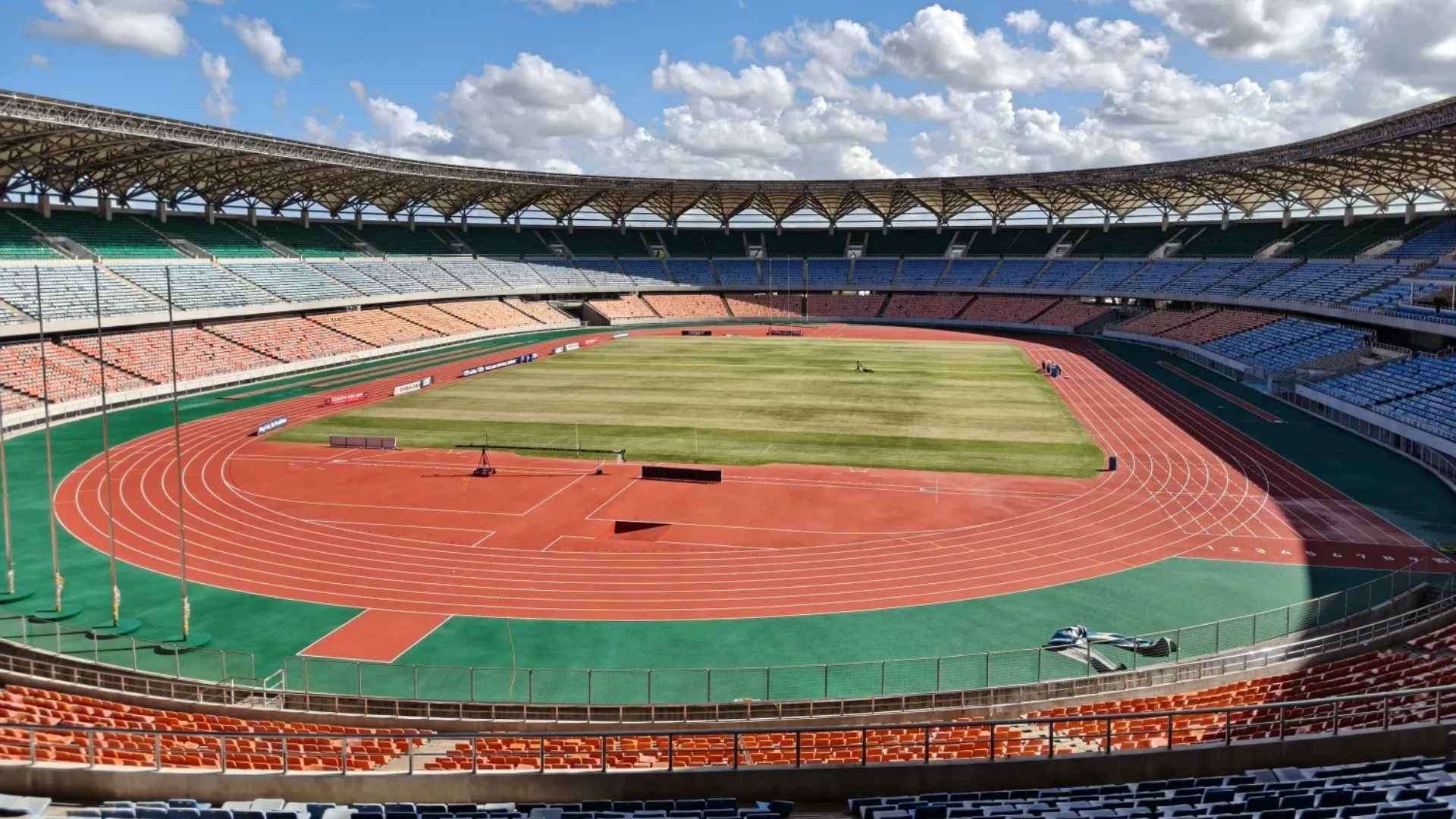
[1] First: The WA World Athletics track certification is valid for five years. This statement is based on currently valid certifications that have not yet expired.
[2] Genuine Full PU Running Track: refers to a cushioning layer made entirely from Jrace Sport-UNITE-TECH Full PU material, without the addition of elastic rubber granules.
Running Track Color Design
With the development of modern sports architecture, running track color has become an important part of overall venue design.
Traditional athletics tracks are generally associated with red, which is closely connected with the development of synthetic running tracks. After the first use of an all-weather synthetic track at the 1968 Mexico City Olympic Games, reddish-brown running tracks gradually became an important visual symbol of athletics worldwide.
Red Running Tracks
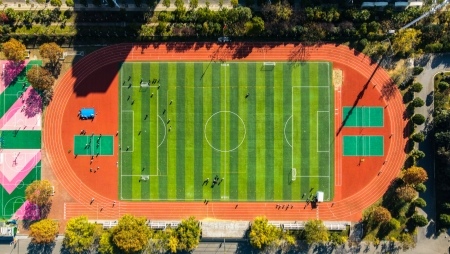
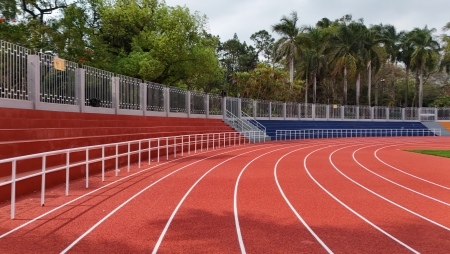
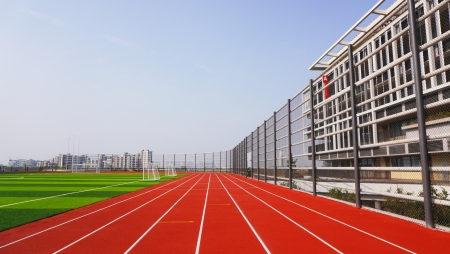
Red remains the most widely used running track color. It creates a strong professional appearance and provides clear visual contrast with white track markings. For this reason, red is widely used in stadiums, schools, and professional training facilities.
Blue Running Tracks
In recent years, blue running tracks have become increasingly popular in modern sports design. Blue provides a clearer and more contemporary visual effect and can integrate easily with surrounding architecture.
The athletics venue at the 2016 Rio Olympic Games featured a blue running track, making blue tracks a classic example of international competition design.
Purple and Other Custom Colors
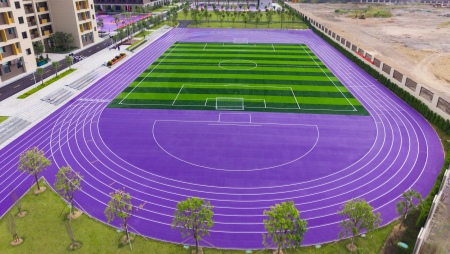
In addition to red and blue, more personalized colors such as purple have also begun to appear at major sporting events. The Paris 2024 Olympic Games featured a purple athletics track, moving beyond traditional perceptions of track colors and reflecting the growing importance of visual design and brand expression in modern sports facilities.
How Should You Choose a Running Track Color?
It is important to note that track color does not directly determine the performance characteristics of the running track. The actual performance of a running track is influenced by factors such as material structure, elasticity, slip resistance, shock absorption, and construction quality.
Color design is primarily used to enhance venue recognition and overall aesthetics. Therefore, color selection should be considered as part of the wider Running Track Design process, mainly for visual appearance and venue aesthetics rather than as a direct factor in the track's performance.
Jrace Sport uses high-weather-resistance EPDM granule technology and provides a wide range of color options. Different color combinations can be customized according to customer requirements while maintaining stable color performance throughout the long-term use of the running track.
Frequently Asked Questions
What is running track design?
Running track design is the process of planning track dimensions, structural type, materials, colors, and supporting facilities according to athletic standards, project requirements, and site conditions.
What materials are commonly used in running tracks?
Common running track materials include polyurethane (PU), EPDM rubber granules, and SBR rubber granules. Different material combinations can affect elasticity, shock absorption, slip resistance, durability, and construction cost.
What is the difference between EPDM and SBR rubber granules?
EPDM rubber granules are commonly used in the surface layer because of their UV resistance, weather resistance, and color options. SBR rubber granules are generally used in the elastic base layer and can provide cushioning and shock absorption when combined with polyurethane.
What color is best for a running track?
Red remains a widely used running track color, while blue, purple, and other colors are also used in modern sports facilities. Track color mainly affects visual appearance and venue recognition rather than the performance characteristics of the running track.
Does running track color affect running track performance?
No. Track color does not directly determine the performance characteristics of a running track. Performance is influenced more by factors such as material structure, elasticity, slip resistance, shock absorption, and construction quality.