

Outdoor sports facilities are continuously exposed to natural environmental conditions, including sunlight, rainfall, temperature fluctuations, and humidity. These factors can affect not only the appearance of the flooring but also its sports performance, surface condition, and service life. Therefore, weather resistance is an important factor to consider when selecting outdoor sports flooring.
1. What Is Weather Resistance in Sports Flooring?
Weather resistance refers to a material's ability to maintain its properties and performance when exposed to natural environmental conditions over an extended period.
For outdoor sports facilities, flooring materials must withstand ultraviolet (UV) radiation, rainfall, temperature fluctuations, and prolonged outdoor exposure. Different materials have different compositions, formulations, and structures, which can lead to variations in performance under different climatic conditions.
It is important to understand that weather resistance does not mean a material will never deteriorate. Rather, it refers to the material's ability to maintain the required performance for a certain period under its intended service conditions.
Therefore, when selecting outdoor sports flooring, it is important to consider not only its appearance immediately after installation but also its performance over the long term.
2. How Do Sunlight and UV Radiation Affect Sports Surfaces?
Sunlight is one of the main environmental factors affecting outdoor sports facilities. Prolonged exposure to ultraviolet radiation can accelerate the aging of certain materials, potentially causing color fading and changes in surface gloss.
For basketball courts, tennis courts, and synthetic running tracks exposed to sunlight over extended periods, UV resistance can influence long-term performance.
However, actual performance also depends on the material formulation, product quality, environmental conditions, and routine maintenance. Weather resistance should not be evaluated based on the material name alone.
3. Why Are Rainfall and Humidity Important Factors in Material Selection?
Outdoor sports facilities must withstand not only sunlight but also rainfall and changes in ambient humidity.
If drainage conditions are inadequate, water may accumulate on the surface after rainfall, potentially affecting normal use. Prolonged standing water may also increase the risk of surface damage or interlayer problems in certain flooring systems. The actual risks depend on the material system, substrate conditions, and drainage design.
Therefore, when selecting outdoor sports flooring, it is important to consider both the material's water resistance and the site's drainage conditions.
Good water resistance does not eliminate the need for proper drainage. Material performance and drainage design must be considered together.
4. Can Temperature Changes Affect Sports Flooring?
Outdoor sports facilities may experience hot summers, cold winters, and significant temperature variations between day and night. Different materials have different levels of adaptability to temperature changes.
For outdoor projects, material selection should be based on local climatic conditions rather than simply adopting a flooring specification used in another region.
For example, in areas with high summer temperatures and intense sunlight, heat resistance and UV resistance should be considered. In regions with cold winters and significant temperature fluctuations, the material's ability to withstand the relevant temperature conditions should also be evaluated.
The final selection should be based on the product's technical documentation and the actual requirements of the project.
5. Which Outdoor Sports Facilities Require Weather Resistance Considerations?
Weather resistance is an important consideration for various types of outdoor sports flooring, although the specific requirements differ depending on the application.
Silicone PU Sports Courts

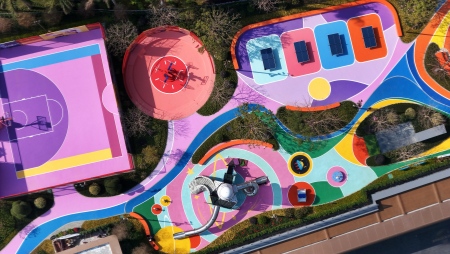
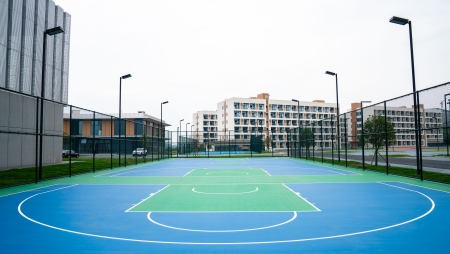
Silicone PU is commonly used for basketball courts, badminton courts, and other sports facilities. For outdoor Silicone PU courts, important considerations include weather resistance, wear resistance, elasticity, and surface condition to support long-term outdoor use. JRace Sports' JRace Unite-Tech Series FIBA-certified product, developed for multi-purpose sports facilities, is suitable for both indoor and outdoor applications.
Acrylic Sports Courts
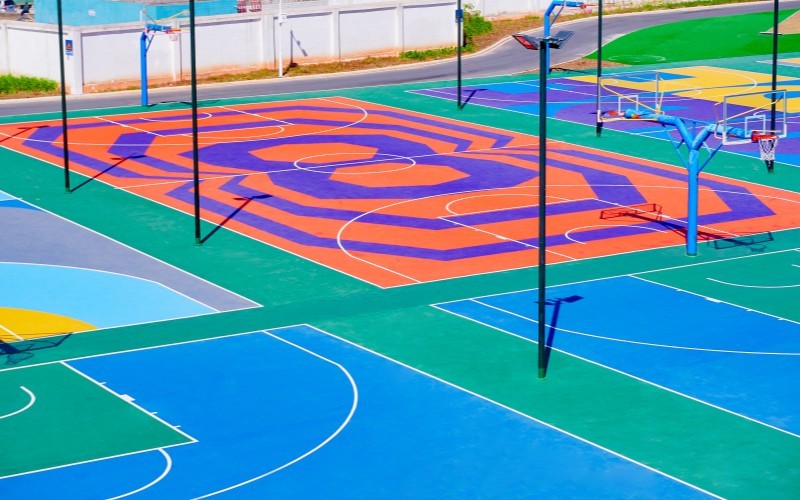
Acrylic flooring is commonly used for tennis courts and similar sports facilities. It offers a wide range of color options and a smooth playing surface.
Outdoor acrylic courts should be evaluated for the effects of prolonged sunlight, rainfall, and temperature changes on surface condition. Routine cleaning and maintenance requirements should also be considered.
Synthetic Running Tracks
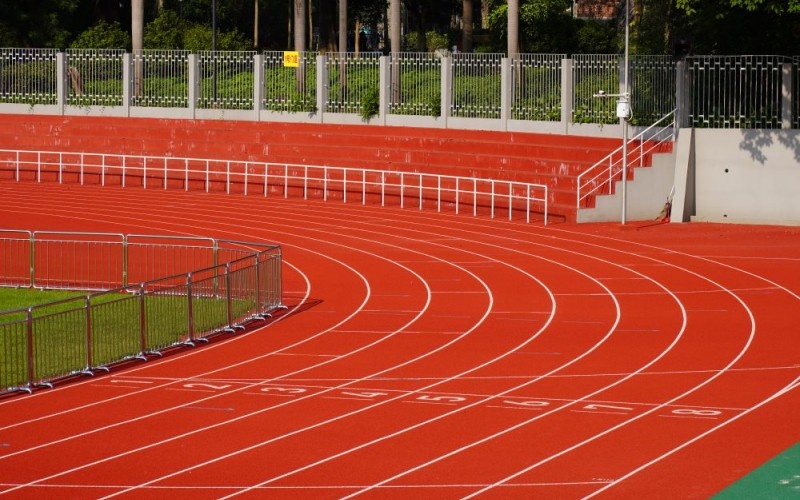
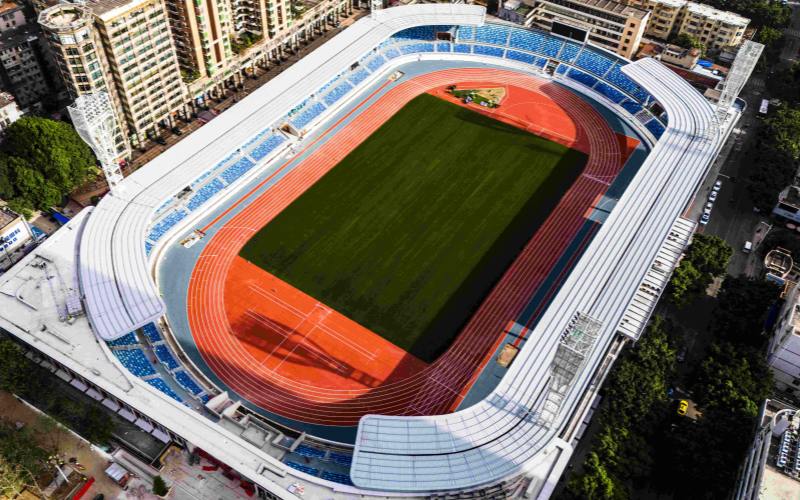
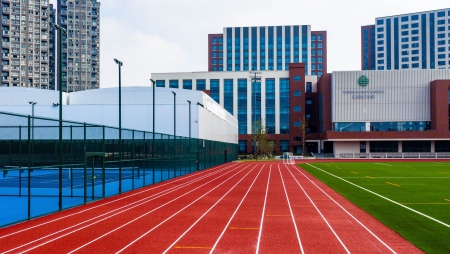
Synthetic running tracks are continuously exposed to sunlight, rainfall, and temperature fluctuations. Weather resistance, wear resistance, and the condition of the surface after prolonged use are therefore important selection criteria.
Different running track systems have different material compositions and structural designs. The appropriate system should be selected according to the intended application, local climate, sports performance requirements, and project budget.
6. How Can You Choose Outdoor Sports Flooring with Suitable Weather Resistance?
To choose outdoor sports flooring with suitable weather resistance, start with the local climate, check the product technical documentation, test reports, and certifications, match the intended use, and keep up regular cleaning, prompt repair of localized damage, and drainage maintenance. For a full guide to choosing flooring for multi-purpose facilities, see How to Build Multi-purpose Sports Facility Flooring.
JRace Sports specializes in synthetic running track materials, Silicone PU sports flooring, acrylic sports court systems, and EPDM sports flooring materials. We provide sports surface solutions tailored to different sports facility projects. If you are planning a new sports facility, you can select an appropriate material system based on the project type, court or track area, and intended use.
Conclusion
Weather resistance is important for outdoor sports flooring because materials are continuously exposed to sunlight, ultraviolet radiation, rainfall, humidity, and temperature fluctuations throughout their service life.
When selecting sports flooring, consider weather resistance, wear resistance, sports performance, drainage conditions, local climate, and maintenance requirements rather than focusing solely on initial appearance or price.
Different sports flooring systems have different material compositions and performance characteristics. By identifying the intended use and environmental conditions and reviewing the relevant product technical documentation, you can make a more informed choice to meet the long-term requirements of outdoor sports facilities.
FAQ
1. Why does outdoor sports flooring require more attention to weather resistance than indoor flooring?
Outdoor flooring is continuously exposed to sunlight, rainfall, and temperature fluctuations. It is therefore important to evaluate the material's ability to maintain its performance and service condition under these environmental conditions.
2. Does weather-resistant sports flooring never deteriorate?
Even weather-resistant materials can change over time depending on their service life and environmental exposure. Weather resistance describes a material's ability to withstand environmental influences; it does not mean the material will never age.
3. Are both Silicone PU and acrylic suitable for outdoor use?
Both Silicone PU and acrylic can be used for suitable outdoor sports facilities. Their suitability depends on the product system, intended application, local climate, and sports performance requirements.
4. How can you determine whether a sports flooring material has suitable weather resistance?
Review the product's technical documentation, relevant test reports, and recommended service conditions, then compare these with the project's local climate. For projects with specific performance requirements, verify the relevant technical indicators rather than relying on the material name alone.