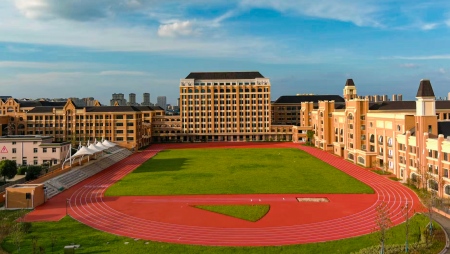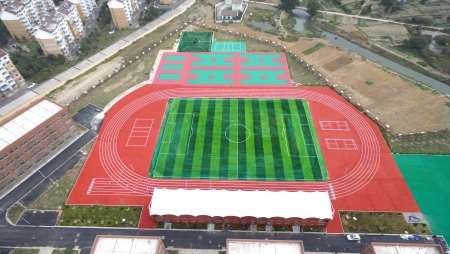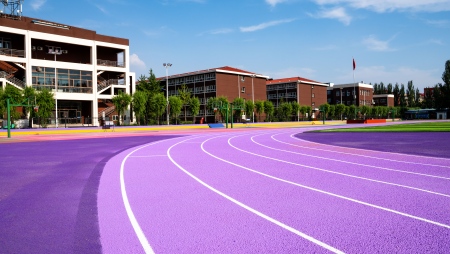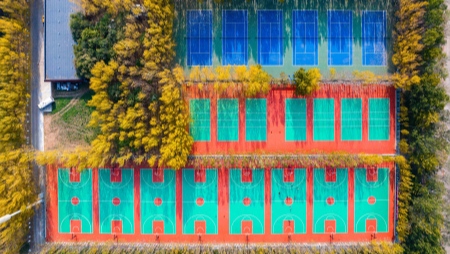


Choosing the right athletic surface depends heavily on the facility's target audience, frequency of use, performance requirements, and budget. There is no universal solution that fits every single project. For facility owners, contractors, and educational institutions, a more practical approach is to select a synthetic track system based strictly on its intended application scenario.
The Best Running Track for Schools: Prioritizing Durability, Safety, and Budget
A running track for schools is primarily utilized for daily physical education classes, general student activities, and amateur training. Because these facilities experience continuous, daily foot traffic from students of all ages, the priority must be balancing durability, comfort, and the overall project budget.
For K-12 educational environments, systems that offer excellent force reduction are essential to protect developing joints and minimize injury risks during gym classes. Additionally, the surface must be highly wear-resistant and require minimal maintenance. If the school occasionally hosts regional track and field meets, the chosen system should still align with those baseline event requirements while remaining cost-effective for daily operational use.
University Athletic Tracks: Balancing High-Frequency Use and Competition Needs
University sports facilities operate at a significantly higher usage frequency and serve a broader range of applications than primary or secondary schools. A university athletic track must accommodate standard physical education, rigorous collegiate team training, intercollegiate competitions, and often community sports events.
Given this diverse usage profile, university projects demand a strategic balance. The surface must deliver elevated sports performance and energy return for competitive student-athletes, while maintaining the structural durability required to withstand heavy, multi-purpose daily use without driving up long-term operating costs.
Professional Stadium Running Tracks: Meeting World Athletics (WA) Standards
Professional stadiums require elite-level performance, exceptional structural stability, and rigorous international certifications. For these top-tier venues, system selection is dictated by the highest competition levels and strict site requirements.
If a stadium is designed to host international or national elite events, it is critical to confirm during the initial design phase that the synthetic system holds World Athletics (WA) certification. The selection here cannot be based on budget or basic product names; it must rely on comprehensive testing data, vertical deformation metrics, and proven performance in professional athletic environments.
Running Track Application Guide: 5 Key Factors for System Selection
To navigate the procurement process effectively, project stakeholders should evaluate five core criteria before requesting a material quote.
1. Facility Users: Daily Physical Education vs. Professional Training
Identify the primary demographic. The biomechanical needs of primary school students differ vastly from those of university athletes or track clubs. The system's elasticity and shock absorption should be tailored to the primary user group.
2. Usage Frequency & Long-Term Maintenance Costs
Evaluate how often the track will be in use. A track used for high-intensity, round-the-clock training requires a robust surface layer capable of resisting spike wear and heavy abrasion, preventing the need for premature resurfacing and keeping long-term maintenance costs low.
3. Formal Competitions & Certification Requirements
Determine if the facility will serve as an official competition venue. If so, establish the necessary performance benchmarks and certification standards (such as WA or specific national standards like GB 36246-2018) well before material selection.
4. Project Budget Allocation
Different synthetic systems involve varying material structures and installation complexities, directly impacting the total project cost. Establishing a clear budget range helps manufacturers narrow down the most viable options, preventing time wasted on systems outside the financial scope.
5. Existing Base Conditions (New Build vs. Renovation)
The state of the substrate dictates the installation approach. New constructions allow for a perfectly engineered asphalt or concrete base, while renovations may require specialized leveling or material compatibility assessments to bond securely with an aging foundation.
Material Recommendations: Full PU, Sandwich, or Prefabricated Systems?
Instead of searching for the subjective "best" surface, the goal is to match the structural characteristics of specific materials to your project's unique demands.
High-performance Prefabricated and Full PU running track systems deliver the maximum energy return and precision required for professional stadiums and elite university athletic tracks. For community and K-12 school projects, Sandwich or Semi-prefabricated synthetic running track systems often provide the ideal middle ground, offering outstanding durability, excellent shock absorption, and a highly favorable return on investment for high-traffic environments.
Jrace Sport engineers and manufactures a complete portfolio of professional sports flooring solutions, including Full PU, Sandwich, Semi-prefabricated, and Prefabricated Synthetic Running Track Systems. Backed by extensive international project experience and rigorous industry certifications, our technical team provides targeted material recommendations and installation support tailored to your exact site conditions and application scenarios.